

Resources
›
Roommate Living 101: Finding Compatible Housemates & Making It Work
Roommate Living 101: Finding Compatible Housemates & Making It Work
By Residen Listings
•
December 17, 2025
•
5 min read

Picking the right roommates can lead to an amazing off-campus living experience
Living with roommates is often where some of your best student memories happen. Late-night study sessions, spontaneous dinner plans, and always having someone to decompress with after exams. Roommate living can genuinely enhance your university experience when you find the right people, and can create lasting memories.
The most important thing? Setting things up for success from the start.
Why Living With Roommates Works
Aside from the obvious financial benefits (splitting rent and utilities significantly reduces your housing costs), roommates offer:
- Social support during stressful academic periods
- Sharing chores like cleaning, grocery runs, and household tasks
- Safety and companionship, someone's usually home
- Learning experience in communication and compromise (skills that translate to future careers and relationships)
The most successful roommate situations happen when everyone's on the same page about the basics before moving in together.
Finding Your People

Finding compatible roommates can make your university experience much more enjoyable
If you're not already living with friends, finding compatible roommates might feel scary. The obvious first step is to ask yourself: "Do I like this person, and can I spend a lot of time with them?". If the answer is a yes, here's what else to look for:
Lifestyle alignment:
- Sleep schedules (early bird vs. night owl)
- Study habits (total silence vs. background music)
- Social preferences (frequent guests vs. quiet spaces)
- Cleanliness standards (organized vs. lived-in)
Practical compatibility:
- Budget alignment - Can everyone comfortably afford the rent?
- Lease term needs - Are you all planning on staying for the full lease term?
- Academic schedules - Will you have overlapping or complementary routines?
Communication style:
- How do they handle conflicts or problems?
- Are they responsive and reliable?
- Can they have hard conversations without being defensive or mean?
After connecting with potential roommates through friends, university groups, or your network, Residen's Housemates feature helps you coordinate your search together. Instead of messaging screenshots back and forth or juggling group chats, your entire group can browse together, compare liked listings, and organize showings in one place. Groups using Housemates on Residen convert to signed leases at significantly higher rates because they're already aligned and organized.
The Essential Pre-Move-In Conversation
Before signing a lease together, it's important to have an honest discussion about:
Financial arrangements:
- How will rent be split? (Equally? By bedroom size?)
- Who's responsible if someone can't pay their portion?
- How are you splitting utilities?
- How are you splitting shared expenses (groceries, household supplies, cleaning products)?
Daily living expectations:
- Guest policies (overnight stays, large gatherings, etc.)
- Quiet hours and study time rules
- Kitchen and bathroom schedules
- Cleaning responsibilities
Conflict resolution:
- How will you address issues as they come up?
- Will you have regular house meetings?
- What's the policy for guests that overstay or habits that bother others?
Having these conversations upfront might be hard, but isn't awkward; it's mature. It shows you're all committed to making this work together.
Setting Up Your Shared Space
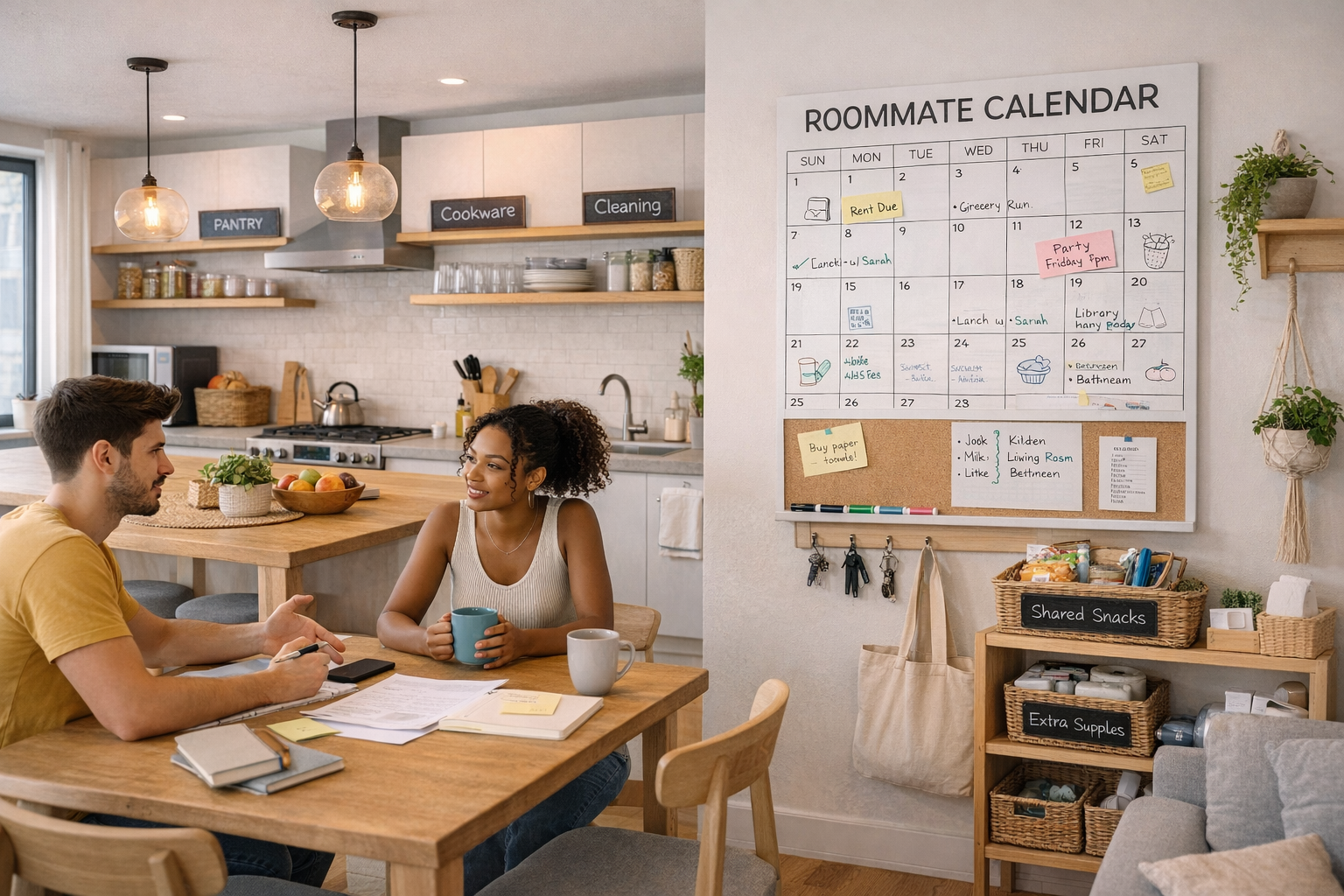
Having a well-organized space is a great way to set yourself up for success
Once you've found your group and signed the lease, make sure to set yourselves up in a way that'll work long-term:
Figure out what's shared vs. private:
- Label food and kitchen items if you're not sharing everything
- Assign fridge/cabinet space for each person
- Clarify what's communal (TV, furniture) vs. personal
Build systems that work:
- Cleaning rotation with a visible chart
- Shared household items fund
- Mail/package distribution
- Trash and recycling schedule
Maintain common spaces:
- Keep shared areas generally tidy
- Clean up after yourself in kitchen and bathroom
- Respect shared items (don't eat someone else's takeout, borrow things with permission)
The more you can clear things up, the fewer issues might arise.
Communication is Everything

Having open and frequent communication can eliminate issues before they come up
It's not fun when no one in the house talks to each other. The best roommate situations have open, regular communication:
Daily check-ins:
- Quick updates on schedules or plans
- Heads up if you're having guests
- Immediate cleanup if you make a mess
Regular house meetings:
- Quick monthly meetings keep small issues from becoming big ones
- Celebrate what's working well
- Address problems while they're still minor
Conflict resolution:
- Address issues directly with the person involved (don't send passive-aggressive texts)
- Use "I feel" statements rather than accusations
- Assume good intentions, because most conflicts are misunderstandings
- Compromise and find a middle ground
Remember, your roommates aren't mind readers. If something bothers you, speak up about it.
When Challenges Arise
Even great roommate situations hit rough patches. Here are some common scenarios and how to handle them:
Different cleanliness standards:
- Focus on shared spaces (you can't control their private bedroom)
- Agree on some acceptable standards for common areas
- Consider hiring a cleaner if your budgets allow
Noise or schedule conflicts:
- Buying earplugs, white noise machines, or headphones
- Compromise on quiet hours that work for everyone
- Let roommates know ahead of time for large gatherings or overnight guests
Financial hiccups:
- Build in a small amount in your budget for unexpected costs
- Address payment issues immediately before they start racking up
- Keep receipts of any shared expenses
Most issues can be solved with direct, respectful conversation.
Ultimately, It's About Partnership
Living with roommates isn't about finding people who are exactly like you or who might be your best friends, it's about finding people you can comfortably live with. The best roommates are the groups that balance respect, communication, and flexibility.
You'll all have different backgrounds, habits, and preferences. That's normal and makes living together interesting. What matters at the end is that everyone is committed to making the shared living space work for the whole group.
Ready to Find Your Roommate Group?
Whether you're a group that already knows each other or a student looking to connect with future housemates, having the right tools and approach makes all the difference.
Explore student housing options and use Residen's Housemates feature to coordinate with your group, compare preferences, and find the perfect place together; all in one platform designed specifically for student renters.
Ready to Find Your Student Housing?
Browse thousands of listings across Ontario